
Blog
The Science Behind Effective Training and Recovery

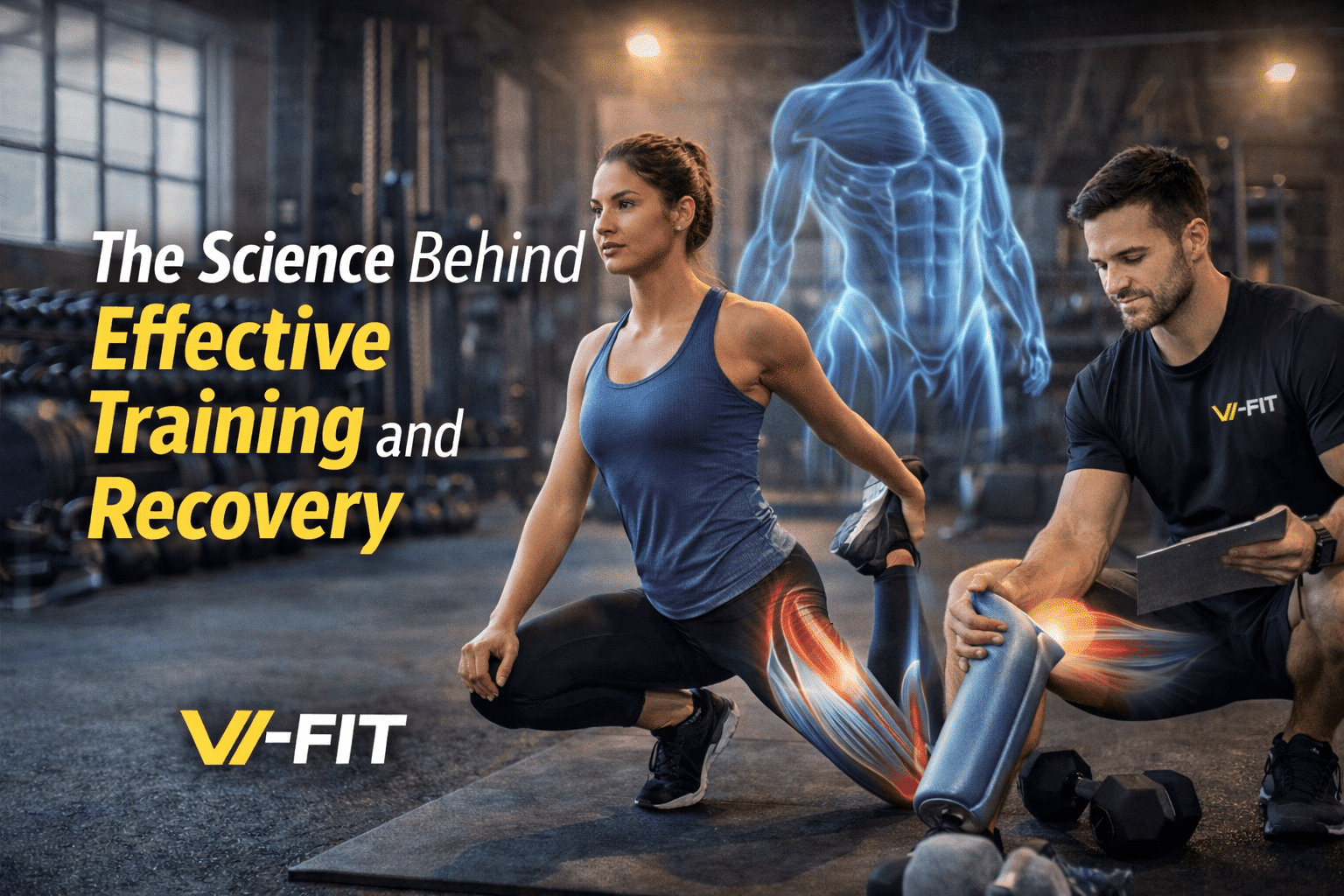
Many people believe that fitness results come only from intense workouts and long hours at the gym. While training is essential, real progress happens when exercise and recovery work together. Without proper recovery, even the most well-designed training programs can lead to fatigue, plateaus, or injury. At VI-FIT, we emphasize a science-based approach that balances effort with restoration
Understanding how the body responds to training is the key to achieving sustainable and long-lasting results.
How the Body Adapts to Training
When you train, you are not instantly becoming stronger or fitter. Instead, you are creating controlled stress within the body. Muscles experience microscopic damage, energy systems are challenged, and the nervous system is activated. This stress is necessary—but it is only half of the equation.
The real improvements occur after the workout, during recovery. When the body rests, it repairs muscle fibers, replenishes energy stores, and adapts to handle future demands more efficiently. This process is known as supercompensation, and it is the foundation of physical progress.
Why More Is Not Always Better
One of the most common mistakes in fitness is overtraining. Many people assume that training harder or more frequently will accelerate results. In reality, excessive training without adequate recovery can slow progress and increase the risk of injury.
Symptoms of poor recovery include constant fatigue, reduced performance, lack of motivation, and prolonged muscle soreness. A smart training program respects the body’s limits and allows sufficient time for adaptation. At VI-FIT, training intensity is matched with recovery strategies to ensure continuous improvement.
The Role of Sleep in Recovery
Sleep is one of the most powerful recovery tools available—and one of the most overlooked. During deep sleep, the body releases growth hormone, repairs tissues, and restores the nervous system. Poor sleep can directly reduce strength gains, endurance, and mental focus.
Consistent, high-quality sleep supports muscle recovery, hormonal balance, and overall well-being. That’s why recovery education at VI-FIT extends beyond the gym, helping members understand how lifestyle habits influence performance.
Nutrition as a Recovery Tool
Recovery does not stop when you leave the gym. Nutrition plays a crucial role in rebuilding the body after training. Protein supports muscle repair, carbohydrates replenish energy stores, and healthy fats aid hormonal function.
Hydration is equally important. Even mild dehydration can impair recovery and physical performance. A balanced, well-timed nutrition plan enhances the body’s ability to adapt to training and reduces unnecessary fatigue.
Active Recovery and Mobility
Recovery does not always mean complete rest. Active recovery—such as light movement, stretching, or mobility work—can increase blood flow, reduce muscle stiffness, and accelerate healing. Mobility training also improves joint health and movement efficiency, reducing the risk of injury over time.
At VI-FIT, recovery is treated as a skill. Members learn how to incorporate mobility and low-intensity sessions into their routines without compromising training progress.
Nervous System Recovery Matters
Physical fatigue is not only muscular. The nervous system plays a major role in strength, coordination, and focus. Intense training places stress on the nervous system, and without proper recovery, performance can decline even if muscles feel fine.
Techniques such as controlled breathing, proper warm-ups, cooldowns, and structured training cycles help regulate nervous system stress. This scientific approach ensures that training remains effective and safe.
Smart Programming Creates Long-Term Results
Effective fitness is not about random workouts—it is about structured programming. Training plans should balance intensity, volume, and recovery across weeks and months. This approach prevents burnout and allows consistent progression.
At VI-FIT, programs are designed with recovery in mind, ensuring that each phase builds on the previous one. This long-term perspective helps members avoid plateaus and maintain motivation.
Training Smarter, Not Just Harder
Understanding the science behind training and recovery transforms fitness from guesswork into a strategic process. When effort is supported by recovery, results become predictable, sustainable, and enjoyable.
At VI-FIT, education is part of the experience. Members are empowered with knowledge that helps them train smarter, recover better, and achieve results that last. True progress is not about pushing endlessly—it’s about respecting the process that turns effort into growth.